Sunday, January 28, 2024

Classic TV Flashback: Star Cops (1987)


Star Cops
Debut: July 6, 1987
Created by: Chris Boucher
Starring:  David Calder, Erick Ray Evans, Trevor Cooper, Linda Newton, Jonathan Adams, Sayo Inaba
Synopsis: In 2027, British career cop Nathan Springer leads the International Space Police Force, nicknamed the "Star Cops," as they try to keep the "High Frontier" safe.

Trey: Star Cops was the creation of Chris Boucher, the writer of several episodes of Doctor Who and script editor for the entire run of Blakes 7.  It ran for only 9 episodes on BBC2, having never found an audience. Wikipedia opines it has since undergone a reappraisal and is praised for its fairly realistic approach to near future science fiction. We watched the first episode on YouTube.

Jason: It is fondly remembered by its fan base (it might be fair to say "cult following") as one of the rare TV shows to embrace hard science fiction, sacrificing the fantastic for scientific plausibility in its presentation of the near future. Very near, in fact, as the show is set in 2027. Other than failing to predict the dissolution of the USSR, how'd they do, Trey?

Trey: It's tough to say, in that, I feel it's not so much unrealistic as unconvincing. The technical details we are given that, in the abstract, seem accurate, but how it's realized in terms of set dressing and the like might as well be the fantasy of Dr. Who. Springs digital (AI?) assistant did seem well done though.

Jason: It certainly also embraces the mundane, sacrificing action and dynamic pacing for character exploration and the nuances of life in the near future. That said, by the end of the episode, we know a lot about Nathan Spring, the setting and the rest of the cast is introduced, he effectively solves two murder mysteries (one each on Earth and in orbit) while the climactic action sequence occurs entirely off camera.  


Trey: I think that's true. The script seems definitely interested in his character. I don't think it gives Calder enough support in turns of scenes or dialogue to really make a lot from that. His given the chance at some acerbic comments that seem very British.

Jason: Well, Boucher's script is notable, among other things, for its refusal to hold the viewer's hand. While the characters must spew exposition, it is often handled entertainingly, I thought. The Robert Altman-esque overlapping dialogue I found hard to parse, occasionally, but I appreciated the intent, which I take as an element of the relentless grounding in realism attempted here. 

Trey: Sometimes it seems the realism of a community theater production...

Jason: Like most BBC efforts of the era, the effects budget is minimal, and it shows. The unfortunate need to depict freefall so often hurts it. I did enjoy Spring's frequent episodes of space nausea, a realist touch used to humorous effect.

The miniatures and designs of space stations and shuttles are well done and ring true enough, especially for 1987, but it's all shot on videotape which just looks terrible, especially on big ol' 21st century TVs. It's a barrier to entry! 

Trey: Agreed on both counts. It desperately needed some cinematic lightning like Miami Vice. Speaking of which, did you notice the oversized suits on a couple of the Brit cops?

Jason: I did, and I'm tempted to contrast Star Cops with its relative contemporary (previously reviewed here) in other ways. With alarming frequency, SC zigs where the MV zags! Spring and Theroux are the Bizzaro World Crockett and Tubbs! MV is above all a visual spectacle and mood, while SC has sharp dialogue delivered by actors dangling from crotch-harnesses!

Trey: That says it all really.

Thursday, January 25, 2024

Classic TV Flashback: Chico and the Man (1974)


Chico and the Man
Debut: September 13, 1974
Created by: James Komack
Starring: Jack Alberston and Freddie Prinze
Synopsis: A cranky, old, white owner of a rundown garage gets a new partner and friend in the form of a twentysomething Chicano.

Trey: Chico and the Man ran on NBC for 4 seasons from 1974 to 1978. It survived the tragic death of one of its leads, Freddie Prinze by suicide in 1977. It was the creation of James Komack who also was responsible for The Courtship of Eddie's Father and Welcome Back, Kotter. It's been suggested that the idea was taken from a couple of Cheech and Chong sketches, something that Komack (at least according to wikipedia) doesn't seem to have entirely denied.

We watched episode 8 from the 2nd season, ""Mister Butterfly" on Tubi. In this one, George Takei guest stars as a Japanese businessman who arrives at the garage believing Ed ("the Man") to be his long-lost father.

Two things to me are notable about this episode (and really series because I also watched the first episode). Both are things I knew so they aren't surprised, but they bear repeating. One is that these older sitcoms are pretty unfunny by modern standards. They have moments of humor, sure, but at best they are relatively less "joke dense" than modern sitcoms and at worst they rely on the lamest sight gags or just general amusement at certain sorts of stock or stereotypical situations. This last I think is mostly a trait of the form. It's present to greater of lesser degrees in "trad" sitcoms up to this day--there just get to be fewer trad sitcoms post the 90s.

Jason: By chance, I also watched (most of) the first episode, after experiencing mild bewilderment with the second season episode we selected. Doing so provided a bit more clarity on the series' intent and the flavor of comedy we should expect. Without getting into it too deeply, I agree that it just wasn't that funny (anymore) and that this social and topical kind of humor is very much rooted to the era it attempts to reflect. Funny faces remain funny over the years, as physical comedy is pretty much eternal, but as cutting edge as C and the M was in its day, the jokes (a nebulous term with many meanings and subcategories) just haven't aged well. 


Trey: Going with "rooted in the era," there's the degree of casual racism and racial stereotypes. The 70s was, of course, getting more honest about these issues after the whitewashing of America common to earlier sitcoms, so it's a trait of things like The Jeffersons, All in the Family, etc. So, Ed's and (in the first episode) these two cops' prejudice and racial slurs in the first episodes are typical of the recognizing the problems and building understanding sorts of elements of these shows. 

Jason: The show was emblematic of what seems to have been an earnest attempt at addressing this whitewashing and lack of representation for the diverse groups that made up the American viewing audience but is clearly a baby step in this direction and likely wouldn't have had the success it did with a more radical approach. The lovely opening montage, depicting early 70's life in an East LA barrio, accompanied by Jose Feliciano's theme song, set my expectations too high. 

Trey: Undercutting its good intentions, perhaps, is Chico's casual stereotyping of Asians in S2 ep 8. Or the broad stereotypically Japanese portrayal Takei and Beulah Quo (as his mother Mariko) are required to give. 


Jason: This stuff set me reeling, as my expectations were thwarted. I expected that stuff from The Man, of course, but not Chico! I wondered if depicting the cultural bias of the ostensible hero of the series wasn't some coded way of excusing the likes of The Man. We're all bigots in some way, after all.

The long shadow of WW2 hangs over the episode, so I was relieved that the stereotyping was of a slightly less-malignant variety than it could have been, which may have been intentional. 

Trey: On the positive side, I think Prinze's charisma is apparent even in just the slim space of an episode. I don't know that it sells me on his standup, but I could see him having had a long career. Albertson is likewise good in his role, such as it is.

Jason: He is charming throughout and his star power shines through the rough material. It may be my imagination, but I thought he might have been struggling with barely concealed discomfort throughout his performance. Whether that be due to his well-known personal problems or a displeasure with the material is unknown to me of course.  

Albertson's embodiment of the Man was pretty much perfect.  

Tuesday, January 16, 2024

Classic TV Flashback: The Starlost (1973)


The Starlost
Debut: September 22, 1973
Created by: Cordwainer Bird (Harlan Ellison)
Starring: Keir Dullea, Gay Rowan, Robin Ward
Synopsis: A group of young people discover their small world is just one habitat of many in a vast generation starship. They must travel to the ship's bridge in order to find the controls to save it from destruction.

Trey: The Starlost is a Canadian series which was syndicated in the U.S. It ran from 1973-1974 for just 16 episodes. It had an auspicious beginning. The concept was created by Harlan Ellison, Ben Bova was signed on as science advisor, and special effects were to do done with a system created by Doug Turnbull. Unfortunately, nothing came off as planned. 

Jason: Even with the knowledge that Harlan Ellison opted to remove his name from this production and go with his pseudonym of disapproval, I had some hope that it would retain enough of the original vision to be of interest. I was also intrigued by the series' long form serial format, something rare in TV science fiction. As it turns out, it was indeed interesting, but sadly not as a hidden gem of quality entertainment!

I was held spellbound throughout my viewing and couldn't help but to squirm with discomfort and sympathize with Ellison as his efforts met with a terrible fate! 

Trey: Sad but true.

Jason: Ellison, a true giant in the field of public airing of grievances, holds forth on the topic in an hour long interview available on YouTube that is considerably more entertaining than this episode. 

Trey: I will say, while I have read that Ellison complains about the story here and there, having read his script, the production is, in synopsis, reasonably faithful (given the restrictions of low budget TV) to his vision. It is in the realization of those words as a television production where it fails.

Jason: The tone is set for in the cold open, in which the principals stare in awe at their Ark after happening upon their first set of windows that provide an exterior view. The camera lingers on the faces of the actors as they gape, minds blown to tiny bits by the revelation. And when I say lingers, I mean lingers! On and on they gape until the credits sequence rolls. Keir (2001) Dullea, cast at least in part due to his SF credentials, gapes with the best of them, but to near-risible effect here. 

Trey: This seen was one Ellison had a problem with. He felt putting this reveal of the spaceship at the beginning was a bad move, and I tend to agree. But we soon move to where Ellison's script starts in Amish-like society of Cypress Corners.

Jason: Yes, and there's guest star Sterling Hayden, whose astonishing biographical notes on Wikipedia are worth a look, is a standout as Elder Ezekiel, but even his performance shows telltale signs of rushed production, sloppy editing, or both. 

The most exciting action sequences in the episode involved Dullea fleeing from an angry swarm of Space Mennonites, all at a leisurely jog due to the tiny sets. 

Trey: Yeah the whole thing feels stagey--really, worse that stagey, more like local theater company production. Some of this came to pass due to the failure of the fancy Magicam system they had planned to employ for the special effects. When that didn't work, they were stuck with a production space too small to build sets and had to resort to blue screening everything. And the chroma key technology of the era is of course not the digital sets we know of today.

Jason: The effects are decidedly unspecial. But beyond that, questionable choices seem to have been made! The information dispensing computer system on the Ark was notable for its eccentric take on a user interface! Surely Ellison envisioned something slightly different?


Trey: In the script, the information dispensing computer is not free of eccentricity and the silliness of pointing to this numbered record or that is still present, but it's more elaborate and so comes off on the page as much less comedy relief.

Jason: All told, I'm sad to report that for this viewer, the abundant promise of what could have been a historic advance in adult science fiction TV entertainment was instead a hash of unfulfilled ambition. 

Trey: I'll dissent mildly. It is indeed cheap and a disappointing product. However, if one comes to it with say 70s Dr. Who production in mind--well, it's even cheaper than that, but I think slope is much gentler, and I think it is possible to appreciate Ellison's script and concept, which I think is pretty good and could be the basis of a good series today.

Tuesday, January 9, 2024

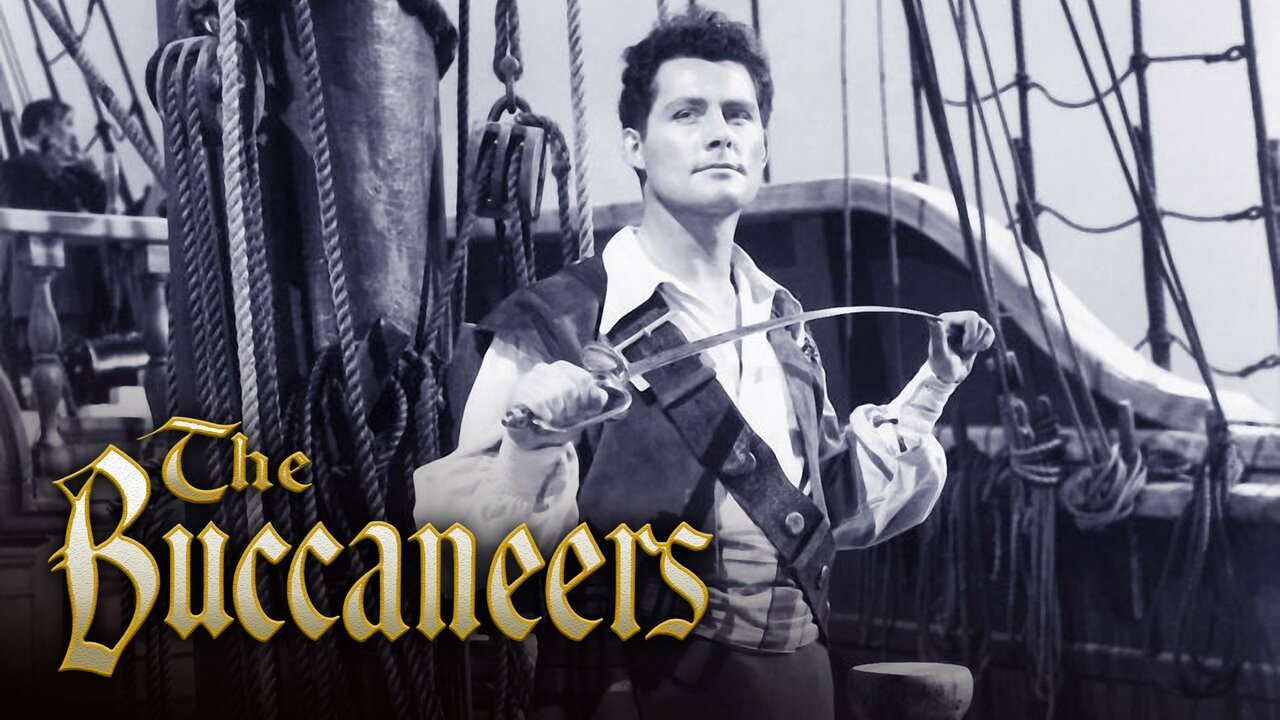
Classic TV Flashback: The Buccaneers (1956)


The Buccaneers
Debut: September 19, 1956
Starring:  Robert Shaw, Paul Hansard, Brian Rawlinson, Edwin Richfield
Synopsis: On New Providence, Captain Dan Tempest, an ex-pirate turned privateer for the Crown, forms an uneasy alliance with Lt. Beamish, the deputy governor, to fight the King's enemies in the Caribbean.

Trey: The Buccaneers was Sapphire Films drama series for ITC Entertainment, broadcast by CBS in the US and ATV and regional ITV companies in the UK. It was somewhat aimed at kids and ran for 39 episodes until June 12, 1957.

We watched episode 12 from December 5, 1956, "Dan Tempest and the Amazons." It was written by Peggy Phillips and Zachary Weiss. I picked this episode because I was intrigued about how they were going to fit Amazons in with Pirates. Bait and switch!

Jason: "Amazons" isn't perhaps the most obvious descriptor of the women here, no. The first couple of minutes of the show were such a showcase for a peculiar 18th century piratical brand of sexism (as presented in this mid-20th century production) that I began to fear the episode would be unfit for review other than finger-wagging condemnation from the 21st century. As the plot unfolded, matters took a (somewhat!) more progressive turn, while remaining peculiar.

Trey: Yes, the women, potential brides looking for prospects in the New World, who have been kidnapped and held for ransom by a "French" (I use that term only loosely as the actors inconsistent and half-hearted attempts at an accent don't rate. I've heard better accents around a D&D table.) pirate. Ultimately, the women prove surprisingly capable and free themselves.


Jason: And that brief sketch probably telegraphs the light-hearted tone of the episode. It's that variety of corny, "battle of the sexes" humor. It ignores the unsavory potential of the situation, keeps the violence gentle slapstick, the references to adult themes mostly veiled, and the sense of peril muted. As a result, there are few swashes successfully buckled. 

Trey: Certainly not. Tempest and his sea dogs are routed by matrons and maids. Of course, one could say that this was due to the men's sexist tendency to underestimate the women. Still, not stuff likely to form the basis of childhood, wood sword derring-do. 

Jason: A glance at the episode listings online suggest this episode may have been an anomaly, a breather from all the action of previous episodes. Sorry kids, no Blackbeards or El Supremos this time around.   


I was excited to see some early work by the legendary Robert Shaw, but I must admit to some degree of disappointment. Am I wrong here or was his performance phoned in? Maybe he just didn't have much to work with this episode?

Trey: Definitely seems phoned in. Hopefully it was just a story he could get behind, not his approach to the whole show.

Jason: Unlike previously reviewed half-hour action/drama shows (like M Squad!), notable for their hyper-condensed plots, The Buccaneers just felt simplistic. Again, this is a show intended for children.

Trey: Not more simplistic but sort of stretched. It could have done with at least another twist or complication. Again, though is it the show or merely this episode?

Jason: I think it would be interesting to try another episode to see if maybe we just picked a clunker this time around. I'm sure I can spare another 25 minutes sometime!

Tuesday, December 19, 2023

Classic TV Holiday Special: Dragnet (1951)


Dragnet (1951 series)
Debut: December 16, 1961
Created by Jack Webb
Starring: Jack Webb, Ben Alexander
Synopsis: Sgt. Joe Friday and his partners follow procedure as they investigate crimes in Los Angeles.

Trey: With the holiday season upon us, it seemed like a good time to dive into the Classic TV tradition of the "Christmas episode." What better place than the venerable, multi-media police procedural franchise, Dragnet. Dragnet got its start on radio in 1949 but moved to TV in 1951. That series ran until 1959. It was revived in new, color series in 1967 and ran until 1971. Films and new series have shown up into the 21st Century.

We watched the episode "The Big Little Jesus" which aired on December 24, 1953. Father Rojas at the Old Mission Plaza Church discovers that the statue of the baby Jesus has been stolen from the Nativity display. The statue isn't worth a lot, but it's of great sentimental value to the parish. Friday and Smith promise to try to get it back before Christmas Day mass--but that means they've got less than 24 hours to do it.

This same story had aired just two days before on the radio show. It would also be remade (as "The Christmas Story"), virtually unchanged, for the 1967 series, airing on December 21, 1967. 

Jason: I vaguely remember watching a few episodes of the 1967 series in syndication in the mid-80s, particularly the infamous LSD episode, as a piece of kitsch illustrating square culture's inability to grasp what the groovy kids were up to. But it had style! The 1953 episode we watched, created at the height of its cultural moment, feels right at home with itself and resists a solely ironic viewing. It is also quite stylish! 

That said, the opening scene jolts the viewer into a bygone culture, as ultra-square bachelor Joe Friday dutifully fills out an impressive stack of Christmas cards. His partner Frank recommends marriage as the pragmatic solution to this burden - his wife takes care of all such matters. Joe muses, seemingly crunching the numbers for a moment, when they are interrupted by news of theft of a statue of the baby Jesus. For the time being, Joe remains all cop.

Their exchange, a machine gun barrage of snappy dialogue presented in quick cuts from close up to close up, demands the viewer's full and complete attention and sets the tone for the rest of the episode. Information is delivered verbally, due at least in part, I'm sure, to Webb's use of the nearly unaltered script for the radio version of Dragnet, as well as time and budgetary limitations. The dialogue comes at breakneck speed, as if fueled by black coffee and an ashtray full of Chesterfields.

One of my favorite moments was when the priest apologized to Joe and Frank for monopolizing their time during the holidays. 

I found this episode fascinating, as a window into the increasingly foreign past and as another example of the hyper-condensed storytelling of its era. 


Trey: I too had seen snippets of the '60s version and I'd seen the 1987 spoof film. Joe Friday doesn't seem quite as square and certainly not as priggish as he would in in the 60s. The 50s is the world he was meant for, though still it's obvious he's a straight-arrow, by-the-book sort.

It's interesting what it says about the view of faith in this era. AVClub did a comparison between this version and the 60s remake that's interesting. All and all, I found my heart suitably warmed with this one. Jason, what about you?

Jason: Most definitely. If Joe Friday can get a little sentimental, there's something there for all of us!

Thursday, December 7, 2023

Classic TV Flashback: Cliffhangers (1979)


Cliffhangers
Debut: February 27, 1979
Created by Kenneth Johnson
Starring: Susan Anton, Ray Ralston, Michael Swan, Geoffrey Scott, Carlene Watkins, Tiger Willaims, Michael Nouri, Carol Baxter, Stephen Johnson
Synopsis: Three serialized tales of adventure are presented each week: the mystery/adventure of Stop Susan Williams, the Weird Western of The Secret Empire, and the horror of The Curse of Dracula.

Trey: Cliffhangers is an unusual NBC series that aired from February to September 1979. In each installment, you got a chapter of 3 serialized stories, resembling the matinee serials of the past. One of them, The Secret Empire, was based on the old Gene Autry serial, The Phantom Empire, in fact.

On paper, this idea had a lot going for it. You were essentially running three 3 series in one hour, so if one failed to find an audience, it could be switched out for something else. However, running 3 productions meant the cost of 3 productions. It was an expensive show. It also aired opposite the powerhouses of Happy Days and Laverne & Shirley. Plus, at the end of the day, it really just isn't that good.


Jason: Well, it was an experience! Nostalgia for the entertainments of yesteryear, in this case the action-oriented serials of the 30's and 40's (and televised for Baby Boomer audiences in the 50's and 60's, was in the air in the 1970's. The Star Wars phenomena that preceded this show and Indiana Jones following a year or so after Cliffhangers bit the dust are both obvious examples of successfully updating serial tropes. 

Conceptually more interesting than entertaining, Cliffhangers was a challenging watch, at least in part due to the dreadful scan available on YouTube, which would have looked much better on a smaller screen that I used. I managed to suppress the urge to change the channel (which, if this show was on in my childhood home, likely occurred), and dutifully stayed the course, buoyed by the hope that the next segment would be better.

Trey: You're right about than YouTube upload. It was like watching through gauze, but perhaps that made the experience more authentic given the vagaries of TV and reception back in the day? Are there positives here we could accentuate?

Jason: Mercifully, it actually did seem to get better from segment to segment. 

The Perils of Pauline-inspired Stop Susan Williams ticked off the genre boxes but felt dreary to me. The only real updating I detected was in Susan Anton's wardrobe. 

The Secret Empire gave us an elevator from the Old West to an alien underground city, which is always welcome. The city itself appeared to have been shot in an abandoned shopping mall. It was difficult to tell if anything interesting would follow in subsequent episodes that Gene Autry hadn't already dealt with in the 30's incarnation. 

Trey: There is precedent for Modern public buildings as futuristic cities. See Logan's Run. In any case, the few episodes I saw of this as a kid (I don't recall how many or if I sat through an hour. I didn't remember Susan Williams at all.) it was The Secret Empire I was most interested in. I had seen some of Phantom Empire on PBS as a kid. Like with Phantom Empire, I was not of an age where it's parsimony with the sci-fi allowed it to hold my interest.


Jason: Of the three stories we watched partially unfold in this episode, my favorite was the disco-age adventures of professional academic Dracula. If only we could have been treated to Dracula's lecture in its entirety instead of pesky Van Helsing intrigue already-in-progress! I'll sign up for Dracula's TED talk any day. 

Trey: Yeah, while not great, that segment works the best here. It eventually got edited into a TV movie. Circling back to the Secret Empire, one more thing I noticed there: the hero breaks out a bullwhip for one scene. You would swear it was a ripoff of Indiana Jones except of course this show predates Raiders of the Lost Ark.

Jason: It's perhaps a shame it wasn't riding those coattails. It might have given them pointers on updating the material for the modern audience.

Tuesday, November 21, 2023

Classic TV Flashback: Peter Gunn (1958)


Peter Gunn
Debut: September 22, 1958
Created by Blake Edwards
Starring: Craig Stevens, Lola Albright, Herschel Bernardi, Hope Emerson, Byron Kane
Synopsis: Peter Gunn is a suave, well-dressed private investigator with a love of cool jazz and a knack for finding trouble.

Trey: Peter Gunn is a 1958-1961 series that aired first on NBC and then ABC. It has some similarities to Mr. Lucky, another Blake Edwards series we watched.  Cary Grant was an inspiration for the style of the main character and it has a score by Henry Mancini. In fact, it's theme is probably one of the most recognizable pieces of music of the later half of the 20th Century.

Jason: After this recent re-exposure, that theme song is hounding my mind on a constant involuntary mental replay. Not only is it endlessly catchy, but it has spawned a multitude of derivative offspring in a variety of genres. I love the B-52s take on "Planet Claire," to name one example. 


Trey: Indeed! We watched the second episode, "Streetcar Jones" where a jazz club band leader wants to prove one of his musician friends is innocent of a murder, but the musician's lawyer high-priced lawyer suspiciously doesn't want his assistance. The whole series is available on Freevee.

Peter Gunn has a sort of sophisticated style and hints wry humor of Mr. Lucky. It doesn't quite charm me the way the episodes of that series did. The lack of the sidekick is part of it, but I don't think the character of Gunn (or possibly the portrayal) has quite the charm of the titular Mr. Lucky. Of course, watching only one episode of a series always presents the risk that you don't really have a good sample to judge it by.

Jason: It seemed to me to have an incrementally more "serious" tone than Mr. Lucky, and I agree about the diminished charm. In this episode at least, Craig Stevens' portrayal of Gunn feels icy cold, an utterly unflappable fellow who only turns on the charm at pressing need. He takes a heck of ass-whooping without a single complaint, though his natural beauty remains (stylishly) marred by (dashing) bruises for the rest of the episode. 

I must also agree on Gunn's sidekick-less condition. His Crockett could use a Tubbs.

Trey: Back to Mancini for the moment, his musical cues here are perhaps even better than the ones in Mr. Lucky. 

Jason: I wonder if the music was tailor-made for this especially Jazz-centric episode?

Trey: Jazz-centric, it was. Hearing the hep jazz cat patter here, I wonder if TV of the late 50s represented the jazz subculture any more accurately that 80s TV would do with rock of its era? I did like Carlo Fiore's almost Zen master portrayal of Streetcar Jones. A decade later, such a loopy character would be portrayed as being on drugs, but here, there's no indication he's high on anything but jazz.

Jason: Great Neal Cassady's ghost! The jailhouse discussion of the distinction between "getting it" and "digging it" was almost hilarious in its earnest examination of the ineffable. I have to think you are correct in your suspicions, and I too imagined fully qualified hepcats of the era cringing at the portrayal of their patois.


I really felt the director's hand in this episode, and he's swinging for the fences. The opening sequence features a transition from the Big Eye club's sign (a big eye) to the business end of a saxophone jamming away inside, letting us know right out of the box that someone cares about making this show look as cool as possible. Again, I am reminded of Miami Vice.

Trey: It's a stylized world in some ways. Half-hour episodes don't leave time to worry about gritty realism.

Jason: My verdict: It didn't knock me out the way Mr. Lucky did, but Blake Edwards is doing fine TV work if this episode is any indication. 

Trey: Just the thing for viewing after dinner at the supper club with a martini in your hand.

LinkWithin

Related Posts with Thumbnails