Sunday, July 3, 2011

The Night of the Bat - A Lost Brave and the Bold

One of the coolest comic book sites on the internet has to be Marvel Two In One: The Lost Issues (formerly Brave and the Bold: The Lost Issues.) For those of you who have not seen the site, it's a amazing gallery of imaginary comic book covers wherein Ross, a very talented digital artist creates team ups featuring Batman or the Thing and an assortment of characters they never got to team up with. Every week I am amazed at the work and ingenuity that goes into the covers, but most recently I was surprised to see one featuring Jack Lord (I'm a HUGE Hawaii 50 fan).

I was so impressed with the H50 cover that I thought I would try to make one similar, but of a different show from my youth: The Wild Wild West. Below is my modest attempt. I'm not nearly as skilled as Ross.

SYNOPSIS: In this issue that never was, Professor Loveless is putting the final touches on his time machine when James West and Artermis Gordon bust into his secret lab. During the ensuing gun fight, bullets hit the time machine and it inadvertently transports Batman and the Joker back to the old west. In true team up fashion, Batman mistakes the gun wielding West as an outlaw. West believes The Batman is some new bodyguard hired by Loveless. Fisticuffs ensue.

The Joker quickly realizes that he should throw in with Loveless and together the beat a hasty retreat. Once safe, Loveless finds the Joker's humorous mayhem resonates with his own sense of whimsy and together they plot to kidnap a besotted President Grant and terrorize Washington.

After several plot twists which do NOT involve giant mechanical spiders, The team of Batman, West and Gordon manages to defeat Loveless and The Joker, and return them back to their rightful time.


Interesting thing I discovered while getting artwork for this cover. The old Dell Wild Wild West comics apparently are in public domain. If this is incorrect, please feel free to correct me as I would be interested in knowing the status of these comics.

I don't see the first two issues on the site, so here's number one. If you like it, feel free to check out the rest of them from the internet archive.

have a great July 4th!

- Jim

Friday, July 1, 2011

The Beginning of a New Age

Editor's Note: I can't promise this will be the last article on the DC Relaunch you'll read on this site. As a comic news event, it's probably the biggest one we've had since Crisis on Infinite Earths rebooted the DC Universe - and that didn't have the digital angle. So with that in mind, Clayton and I are happy to present some quick thoughts today on what is sure to be the start of a new age, one way or another. - Jim


Clayton: To be perfectly honest, when I heard about the DC Reboot, I was a little concerned. However, I wanted to wait a little longer and see what they had to offer before I made any judgments.

Jim: Yeah, my knee jerk reaction was that as a creative move, it struck me as sort of played (how many reboots have we seen that failed?) but as a big, bold marketing move, it was sort of genius.


Clayton: Now after seeing their September previews, I can honestly say this just doesn't work for me. I can overlook many of the changes; even learn to accept this new Superman but there is a lot of stuff that rubs me too wrong.

Jim: I’m still in wait and see mode. I’m actually excited about both versions of Superman coming out. Morrison’s will be either an amazing success or a fabulous train wreck because that’s how Morrison’s stuff always seems to me. I have no idea what Perez will do with the character, but he’s such a classic old school guy that I’m betting I’ll find some stuff to like in it.


Clayton: I just don't like the fact that there is now, nor apparently ever was, a Justice Society of America. Decades of history that built the foundation of a once great company is gone. It has been said that they wanted the more contemporary heroes to be the originals. Big, big mistake!

Jim: That to me is one of the dumbest things about this. The beauty of the old DC Universe is that you had all of the characters from different spans of time in the universe (Golden Age, Silver Age, ect…) which meant that artistically, no one era dictated the look and feel of the universe. I mean, would anyone really design characters to look like Wonder Woman or Firestorm now? Imagine if this global redesign had taken place in the 90’s.

Clayton: As for their new line up of titles, very few actually appeal to me at all. I was once a huge Teen Titans fan, but honestly, I can barely keep my lunch down when I see what is going to pass for the Titans now.


Ok, that may be a bit harsh, but the uniform designs are really not the best, (And don't even get me started on Harley Quinn and Black Canary's new looks).  Speaking of the 90's, Black Canary actually has shoulder pads!


Jim: I’m looking forward to Justice League International and OMAC. Others I may check out our I, Vampire and Resurrection Man. (Which strikes me as a bit of a odd ball. Of all the titles to bring back, that’s the one they choose?)

Clayton: Yeah, it’s not all bad. There are some titles that I may start checking out. The new Hawk and Dove looks interesting, as well as Frankenstein: Agent of Shade. Legion Lost, The Grifter, Justice League International, possibly Blue Beetle, Fury of Firestorm, and Static Shock as well. If these comics can hold my interest, then maybe I will step out of myself a bit and try one or two of other titles.

Jim: Either way it works out, this promises to be one of the most exciting years in comics. :)

- Have a great July 4th Weekend everyone!

Wednesday, June 29, 2011

What Kills a Hero: Duela Dent

Editor’s Note: Today Clayton picks up from part one of What Kills a Hero to bring some more ways he thinks characters can truly die.


Perhaps the fastest way a hero can shuffle off this mortal spinner rack is when a new writer comes in and wastes the characters potential. Nothing can destroy an interesting character faster than apathetic and/or unimaginative writers who fail to pick up the torch handed off to them by the original creator.

An example of this syndrome is one of my favorite character's from the Bronze Age, the Joker's Daughter from DC Comics.


Created by Bob Rozakis during his Bronze Age run on Batman Family and Teen Titans, she was a fun character who claimed to be the daughter of the Joker, but was actually the daughter of Two-Face. Wanting to atone for her father’s crimes, she eventually took on the name Harlequin and joined the Teen Titans using an assortment of Joker inspired gadgets.

When Rozakis left DC, she was mothballed. And if that had been that, all would have been fine, but as other writers brought her back, her origin and personality would become more confused with each appearance. Her Post-Crisis appearances cast her as a middle aged mental patient who may or may not be suffering from schizophrenia. Each new appearance only served to diminish the original potential of the character. Eventually, she was (mercifully) killed in the pages of Countdown.

And while many people may think she didn't have much potential to begin with, I would ask them to examine the popularity of another Batman family femme fatale:


Harley Quinn is spiritually the twin of the Joker’s Daughter. True she is played for more sex appeal, but the Karl Kesel/Terry Dodson Harley Quinn series portrayed her in a way that echoed Duela Dent’s lighthearted first appearances. And I’m not the only one who believes that. Bob Rozakis has said this about the way the Joker’s Daughter has been written since he left DC:

I got a laugh out of it when I first saw it, but I thought they wasted the character. I realize that Marv and company didn't want her around anymore and felt they had to explain her away because of continuity, but they could have just as easily ignored her. Actually, I consider Harley Quinn to be a reincarnation of Duela


Recently, with the DC Relaunch of the Teen Titans, Duela Dent was mentioned as one of the characters DC was considering as a member of the re-imagined Titans team. For whatever reason, they decided against this. Perhaps this is for the best. Judging by the way DC has treated each new incarnation, I don’t know if I would want to see how they botch it again. :D

- Clayton

Monday, June 27, 2011

The Art of Gene Colan

Friday saw the passing of one of the great comic artists, Gene Colan. I remember the first time I encountered his art in the pages of Eddie Young's Daredevil when I was just 7 years old. Eddie wanted to trade his issues of Daredevil for some issues of Avengers I had. At the time, I wasn't really familiar with Daredevil, but I agreed to the trade because at 7, you don't have a lot of options for getting new comics. The issue he gave me was of Daredevil with Man-bull in it.
 
This was my first exposure to the Colan's art, and the style really threw me for a curve. Up till then, I was under the impression that comics were supposed to look a little exaggerated (like Jack Kirby) or be newspaper strip clean (like Curt Swan). Colan's world of scowling faces, tensed muscles and expansive shadows struck me as a bit out of sync.

As I encountered his art in other comics, I came to realize that Colon was someone who could draw a great Tony Stark, Mandarin or Sub Mariner, but bright shiny superhero suits weren't really his forte.


And while there's no denying his fabulous run on Daredevil, what Colan was best suited for (IMO) was dramatic supernatural tales, which is probably why he clicked so well on Tomb of Dracula and Dr. Strange.


or Night Force


All in all, it makes me wish we had seen Colan on more titles like these during this era (as opposed to Wonder Woman). 

Here are some I think he would have been great on:
  • Man-Thing (where he could have worked with Howard the Duck cohort, Steve Gerber)
  • Swamp Thing
  • Phantom Stranger
  • Morbius
  • Ghost Rider
  • The Demon
  • Black Orchid

And while we'll never get to see what his versions of such stories might have been like, I'm thankful for the great work he did bring us.

- Jim


Friday, June 24, 2011

What Kills A Hero?

Editor’s Note: Today we have another post from Clayton. This one is on Death in Comics, and as you might imagine, it’s a hard topic to talk about without discussing a few spoilers. Now with so many deaths and resurrections in comics, I’m not sure that it’s possible to spoiler such an event, but just in case that sort of thing bothers you, feel free to skip today’s post. - Jim


If you have a favorite comic message board, you’ve no doubt seen at least one thread about the overuse of death of characters to goose sales. Currently, Ultimate Spider-man is sparking this debate several places. This begs the question: what prompts a company to kill characters so much in this day and age?


True, there is the poor sales angle. If a character is deemed by the powers that be as an unsellable commodity, the logical thing to do is either ignore the character (The Scarlet Spider comes to mind), or to kill them off in one of those “special events” as then the character can become a number in the body count total ( like Pantha in Infinite Crisis, or the Wasp in Civil War).

Others may be killed off for “shock value” or to kick off a certain storyline (like the Ted Kord Blue Beetle from DC, or the Scott Lang Ant Man from Marvel). Originally, this death worked well as a plot device in comic (like when DC killed off the original Mr. Terrific back in JLA 171, the death of Gwen Stacy), but in today's market, the only reaction it gets is a bored yawn. It is just an overused ploy that doesn’t seem to boost either sales or interest anymore. More often than not, the death is now accompanied by some grisly show of violence, like the death of Ares at the hands of the Sentry in Marvel's Siege.


But heroes return from fictional death all the time, so we can take some solace in the idea that in comics death isn’t permanent. But does that really mean a hero can’t be killed? Can other things kill a character? I have seen many heroes and villains die long before their “comic book death.” Most of them have fallen prey to wasted potential or bad editorial decisions.

Next week, Jim and I will examine a few examples where characters have truly been killed.

Have a great weekend!

Wednesday, June 22, 2011

Manhunter Redux

Sometimes publishers put out collections which, IMO, are a bit substandard or lacking. In a few cases these collections are republished in a more deserving format (like the new Great Darkness Saga or the Squadron Supreme Omnibus) . I'd like to suggest another candidate I think should be recollected.

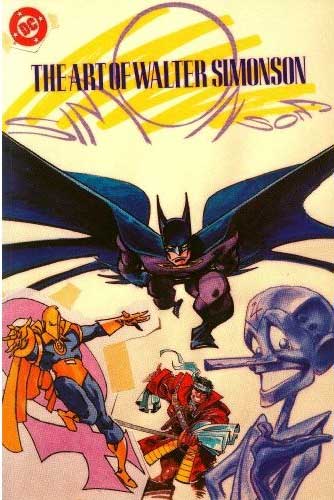
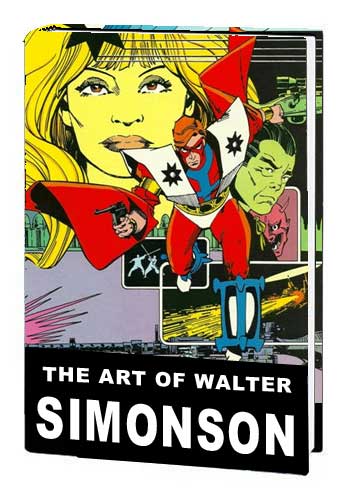
Back in 1989 DC published a collection of many of the comics Walter Simonson worked on in the Bronze Age. It was a trade paperback that looked like this.


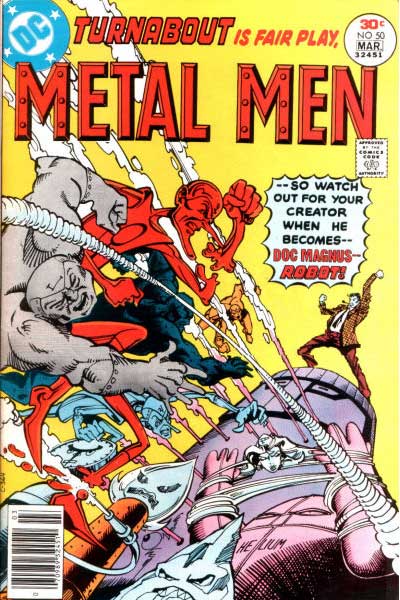
Now the good news is this collection contained some rare gems which many of you fans of the Bronze Age may not be familiar with. Among my favorites from Simonson from this era are his Metal Men stories.


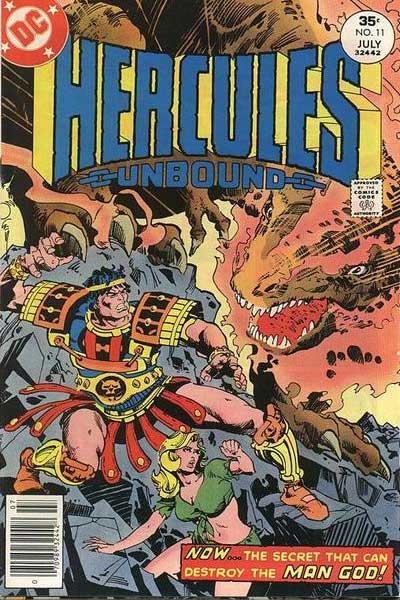
Some issues of Hercules Unbound 


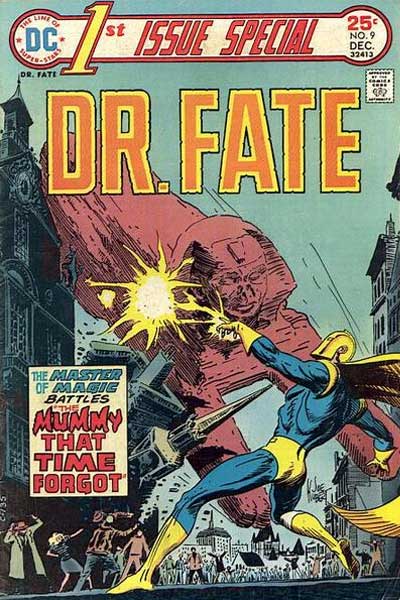
And Dr. Fate


What this 1989 Collection is missing is all of Simonson's Manhunter stories. (These were collected in thin standalone trade.)

I’ve often thought that the Simonson/Goodwin Manhunter as one of those defining moments in comics, much like Watchmen, only to a lesser degree. The ripples in the pond are harder to define and more spread out. Here are a few of the innovative things the series did during its limited run in 1973…
  • First character to have  a healing ability
  • Popularized the use of ancient Oriental weapons
  • First use of clones as adversaries in a comic
  • First Hero to die in a series
Just as Watchmen opened a dystopic door which would let in an entire dark age, Manhunter introduced readers to the elements of postmodernism. Starting in the first story with its metafictional homage to The Spirit, we meet a hero who spends much of his time literally killing himself until the final chapter wherein he destroys his foe with a sacrificial final thought. It’s a rather bleak denouement but we will see similar endings in comics from this point on. (like Starlin's Warlock).

In many ways, Manhunter with its definite beginning and end was sort of an embryonic graphic novel. So the fact that it is not collected in a hardcover edition of strikes me as a bit of an injustice So allow me to present my suggestion for a NEW Simonson collection.

A hardcover with all of the original stories from the 1989 collection PLUS the Manhunter run collected.


Get cracking on it DC! ;)

Monday, June 20, 2011

No Green in the Ring?

This weekend, I saw the Green Lantern movie with a few friends, and as luck would have it, so did Pierre. We all agreed that as movies about superheroes go, Green Lantern was better than expected and overall very enjoyable. It should go a long way towards restoring fans faith in DC/Time Warner's ability to make big budget comic book movies that don't star Batman.


If they actually decide to make any more. And yeah, I know the before the credits scene sets us up for a sequel but I wouldn't go clicking on Fandango just yet. Let me explain...

The first weekend box office tally is looking to be in the neighborhood of $52 million. Below both Thor AND X-men First Class (which performed the worst of any of the X-men movies in its own first weekend.) Rumored budget, including marketing, for GL was $300 million, of which $150 was just production cost alone. That Green Lantern failed to outperform either of those movies is going to chaff someone's butt at Time Warner. However, the sad reality is that all of those movies did worse than Bryan Singer's X-men movie when you adjust for inflation. And Singer's movie didn't have the benefit of overpriced 3D tickets to help boost box office numbers.

And there's the rub. If Green Lantern had come out in 2001, after the first X-men movie and prior to Sam Raimi's Spider-man, then there would be partying in the streets on Time Warner Drive. As it is, I suppose there will be some mumbling about performing to expectations followed by a lightning round of finger pointing. I suspect the early loser will be the Marketing department with later blame placed on the film itself.

Is that fair? I don't really think so. As one of my friends said after the movie; he's sad that he now lives in a world where we know and (to a degree) care about the box office numbers of movies. It taints a movie in a way that causes audiences to steer away from what would otherwise be an enjoyable experience. One wonders if Americans had grown up with the knowledge that the Wizard of Oz was a box office failure, would it be the cultural icon it is today? Waterworld says no.

Bottom line, this doesn't bode well for future DC movies and definitely scotches my plans to make a Diamond Jack movie. ;)

Speaking of Diamond Jack, enjoy his first appearance here in the pages of Slam Bang Comics 1 from Fawcett.


Have a great day!
- Jim

LinkWithin

Related Posts with Thumbnails