Showing posts with label TV. Show all posts

Thursday, June 18, 2026

Things I've Watched Recently on Crunchyroll

 I've been on a fantasy anime kick, so I've been checking out some shows (beyond Frieren, which I have already been enjoying) in that genre.


Sentenced to Be a Hero
(2026) is based on a series of light novels by Rocket Shōkai. It tells the story of Xylo Forbatz, a former knight, now member of Penal Unit 9004. He and the rest of his misfit unit were executed for various crimes then raised with (apparently, it isn't entirely clear) low level superhuman abilities. They are at the forefront of humanities war against the Demon Lords who spread fungal-like Demon Blight. Forbatz's life gets more complicated when a Goddess, Teoritta, binds with him, the Goddesses being a limited resource human's use to bind with warriors to create a formidable fighting team.

The series has an interesting concept and characters and a lot of action. There's only one season available now, but hopefully there will be a second.


Radiant (2018) is actually based on a comic by a French creator, but the anime adaptation is by a Japanese studio, and the English translation of the comic is published by Viz in North America. This one is more light-hearted than Sentenced, at least at its start, and reminds me a bit of Naruto. Monstrous, sort of kaiju-type creatures called Nemeses fall from the sky to menace the populace of this world. People can become infected by contact with a Nemesis. Those that survive gain the power to manipulate the energy-source "fantasia" and become sorcerers (as such superhero as magic-user). Noble sorcerers fight to save the world that hates and fears them. The main character, Seth, is a young Sorcerer in training.

I've only watched a couple of episodes of this one, but it's entertaining enough, if not engrossing necessarily. I find it interesting that it's basically a superhero story but in a very (for American audiences) nonstandard superhero setting, something it sort of shares with Sentenced.


Last, but certainly not least is Witch Hat Atelier (2026). This one is based on a Harvey Award winning manga, and from the anime so far, I can see why it was well-regarded. A young girl named Coco with a lifelong interest in magic accidentally casts a spell that turns her mother to crystal. Though it's against the rules, she is taken as an apprentice by a witch named Qifrey (Who has an ulterior motive. He wants information on the outlawed Brim Hats who are the source of the spell Coco cast.) and joins the other apprentices at Qifrey's atelier. 

I'm enjoying the unfolding mystery of witch society and nature of the schism between them and the Brim Hats. The animation on the series is really nice with designs reminiscent of Studio Ghibli. 

Thursday, February 5, 2026

Classic TV Flashback: More Thoughts on Space: 1999

Anne is a friend and blogging compatriot (she has a rpg blog at DIY & Dragons and a book/film blog at The Lunar Flaneur), and since the algorithms now classify her as "old," she just started watching Space: 1999. I asked her to share her thoughts:

On most streaming services, the "recommended for you" section is usually just a mix of whatever's currently popular, plus advice to rewatch things I've already viewed on the service. But watching It's A Wonderful Life over the holidays seems to have unlocked a new tier of algorithmic recommendations, for what I might charitably describe as mature audiences. Yes, the robots have decided I'm OLD. 

Scrolling through the "Shows for Old People," I spotted Space: 1999, a British sci-fi show from the mid-70s that I knew almost nothing about, except that Modiphius recently released a licensed game for it and it was previously reviewed right here on Flashback Universe.

As I write this, I've watched the first 9 episodes of the first season. Here are my thoughts so far.

My very first impression of the show was that they had clearly invested a lot of time, effort, and money into the props, the sets, the miniatures. Our setting is Moonbase Alpha, currently the distant and advanced scientific facility in the solar system. The interiors resemble the utilitarian aesthetic of a naval vessel or an Antarctic research station. We see halls, control rooms, laboratories, an atomic reactor to generate power for the base. The models representing the exterior of the station or its shuttle crafts are styled to look like something NASA might produce with enough budget, like something from the art of Robert McCall. When people go outside, they wear spacesuits. The action on the moon's exterior uses wirework and maybe a bit of slow motion to recreate the appearance of low gravity.  

I find it impossible not to compare the show to Star Trek, and my initial impression of Space: 1999 is that it's intended to be more realistic than Trek, and that it's going to have better production values. We're on the Earth's moon rather than across the galaxy. We're in the near future of our own society, rather than centuries distant in a post-scarcity utopia. The models representing the exterior of the station and its shuttle crafts have nubbly, detailed surfaces like the Death Star or a Borg Cube rather than the smooth shell of the Enterprise. There's no warp drive, no matter transporters, no replicators. 

The uniforms are drab jumpsuits, without the primary color vibrancy of Trek's outfits. The characterization, at least initially, is almost purely professional. These people have jobs, duties, roles, not personality or idiosyncrasy or charisma. It's hard to tell the extras from the leads. They're all on a first-name basis, so we get Alan, Victor, and John instead of Scotty, Bones, Spock, or Kirk. The computer has no voice. A dozen decisions have deprived these characters of Star Trek's techniques for giving them vitality and individuality, and too little has been done to put any back. Although each episode is under an hour, they're paced so slowly that they feel longer.

For all that, Space: 1999 is absolutely not a realistic show. What this setup accomplishes is to take an ensemble of hard sci-fi professionals and throw them each week into far more fantastical scenarios, which they are in no way prepared for. And they are, quite literally, thrown. By the end of the first episode, the moon has been knocked out of orbit by an atomic explosion on its surface, becoming a rogue planet on an unstoppable one-way trip to the depths of space. The mechanism is something like Iain Banks's Feersum Endjinn or Cixin Liu's The Wandering Earth, the effect like The Odyssey or Harry Martinson's Aniara or Star Trek: Voyager or any of a dozen other stories about lost ships that can't return home. The show's frisson comes from the contrast between the crew of contemporary scientists and the otherworldly, scientifically impossible threats they find themselves faced with. It's a style of science fiction that reminds me of Forbidden Planet or The Black Hole, a style that's about to be buried by the runaway success of Star Wars.

So far, I think I've identified two main types of episodes. In the first, our heroes find themselves trapped in the plot of a disaster movie or creature feature. In the second, they encounter psychic aliens from an ancient and highly advanced society that is nonetheless nearing the end of its lifespan, that will either be rejuvenated or utterly destroyed by contact with the modern day humans on Moonbase Alpha. In both cases, the lunar scientists are very, VERY badly outmatched by a situation that they can't possibly hope to overcome or master, only, at best, survive. 

The disaster and monster episodes are almost like horror movies. In the first few, SO many people die and so many buildings explode that you have to think, if they carried on like that, it would soon defy belief that there's any moonbase remaining to carry on the voyage, or any survivors left to crew it. These episodes are LOUD. The difference between the sound effects and the dialogue level is shocking. Monsters scream, broken machinery wails, the wind roars as atmosphere escapes through a breach into space. 

In the second episode, a crew member is possessed by an alien entity that turns him into a kind of vampire for heat. He freezes half a dozen people to death just by touching them before eventually blowing up a nuclear reactor while trying to embrace its warmth. In the eighth, another crewmember is tormented by the siren call of a giant tentacled beast with a single glowing eye, a monstrosity that wouldn't look out of place on the set of Atomic Submarine, and that Trey informs me was likely inspired by a monster in an Italian sword-and-sandal epic [At least the internet thinks so! - Trey]. These episodes really feel like encounters with an earlier era of scifi storytelling. Compare those two to the salt vampire or the monstrous-looking Horta from Star Trek - in Trek both are motivated by comprehensible desires like hunger or protection, not just alien malevolence. And in Trek, both are intelligent and able to communicate; in Space they make noise but never speak.

The second type of episode is a little harder for me to classify. The aliens are all either literally human or human-looking, and they all wear colorful, flowy space fashion that contrasts with the crew's bland uniforms. They've all been from technologically and socially advanced societies, often worlds that've had spacefaring technology for longer than humans have had bronze tools or writing. But there's more in common than that. They're nearly all psychic, able to read the crew's thoughts. They're nearly all trying to deceive the crew in some way. They're all set in their ways, locked in some sort of pattern they would otherwise remain in indefinitely. For all of them, their encounter with the rogue moon is existential - meeting humanity will change everything, maybe setting them on a better path, maybe causing their extinction. For the crew of Alpha, finding a way through whatever trap's been set requires navigating a conflict between the ideal and the material, between mind and body, between appearance and actuality. 

In the third episode, the moon is set to collide with another planet, but they're asked to take a leap of faith and believe that the merest touch will cause the fatal obstacle to sublime away to a higher plane of existence. In the fourth, aliens who can turn idea into matter show the crew a vision of the catastrophe that would result if they actually made contact. In the fifth episode, they're invited to join a society where everyone is immortal but no one can change, and every day is just like the last. In the ninth, they're again offered membership in an alien society, and again the offer carries much greater costs than are initially apparent.

I'm certain that Space: 1999 was influenced by the original series of Star Trek. Probably some aspects of the show are deliberate imitations, others I think must be attempts to improve on Trek or distinguish Space by charting a different course. I wonder, but I don't know, if Space influenced The Next Generation at all. The base's doctor, Helena, reminds me of Beverly Crusher. In the seventh episode "Alpha Child," an alien warlord implants his consciousness into the mind of a newborn and then rapid-grows its body; it's quite similar to what happens to Counselor Troi in "The Child." The ninth episode I mentioned, "Mission of the Darians," has a divided society that resembles the one in "Up the Long Ladder." It's certainly not conclusive, just enough to make me wonder.

Thursday, November 14, 2024

Blake's 7 on Blu


The British sci-fi series Blakes 7 is finally coming to Region A blu-ray--at least the first season. Amazon has it up for pre-order with a projected release date of December 10. It came out this month in the UK. For the uninitiated, it's about a rebel who leads a group of convicts and outcasts in a struggle against the totalitarian Terran Federation. Jason and I reviewed the pilot here.

While the budget of the show leads to some dodgey props and less than impressive special effects, the stories and generally good as well as the acting.


Tuesday, April 2, 2024

Classic TV Flashback: Have Gun – Will Travel (1957)


Have Gun – Will Travel
Debut: September 14, 1957
Created by Sam Rolfe, Herb Meadow
Starring: Craig Stevens, Lola Albright, Herschel Bernardi, Hope Emerson, Byron Kane
Synopsis: The man known as "Paladin," a gentleman gunfighter, makes his living as a troubleshooter-for-hire in the Old West. 

Trey: The television version of Have Gun – Will Travel aired on CBS from 1957 to 1953. Interestingly, there was a radio version starring John Dehner as Paladin which debuted on November 23, 1958, making Have Gun – Will Travel of the few shows in television history to spawn a successful radio version, instead of the other way around.

We watched Season 3 episode 1 "First, Catch a Tiger" on YouTube. In this episode, two of the three men responsible for hanging Jacob Mordain's son have been gunned down, shot in the back, by the assassin, Fred Horn. The third, Paladin, is invited to Wyoming to face him, and finds himself staying in a hotel with three other men, unsure which is the killer.

I have heard a few episodes of the radio show on radio classics. I must admit having Richard Boone in the lead had kept me away from the TV version a bit. The urbane air of John Dehner seems to fit the character for me. Boone is familiar to me as the heavy in Westerns like Big Jake and The Shootist or more rough-hewn characters like in Rio Conchos. I guess there's always his role in The Last Dinosaur, but anyway nothing makes me think "gentleman gunfighter."

Jason: Bonus points awarded for Boone's ability to pull off that mustache. 

I'm also a fan of his rugged not-so-good looks as a breather from today's relentless beauty.


The well-established relationship between the Western and Chanbara genres really jumped out at me in this episode.  Paladin, Mordain, and the three possible assassins are all bound by rigid (if idiosyncratic) codes of honor without which, we would have no plot. Paladin voluntarily checks into a hotel full of hostile parties, not least among them the proprietor, and hangs out awaiting an inevitable attempt on his life with all the grim dispassion of Mifune's Sanjuro munching on rice balls in a town full of cutthroats. 

Trey: All of the additional cast here are classic TV stalwarts. No particularly other roles jump out at me, but I know I've seen them all before.

Jason: Hollywood legend Ida Lupino directed this episode, and it feels richly cinematic despite the economies of tv production. It looks damn good (and I was grateful for the image quality of the scan we watched) and Lupino's visual storytelling choices shine.  When violence breaks out, while kept relatively bloodless for television, it hits hard. The fistfight sequence was pretty epic! 

Trey: Indeed! Despite my prejudices against Boone, I liked him in this, and I enjoyed the episode overall. In fact, I wish there was more of it! It's really too short to build much tension, and tension is what it's plot needs.

Jason: We agree on Boone and the episode, though in regard to your previous criticism, I may have felt the tension more keenly. Or maybe after reviewing shows like M Squad and Peter GunnI've become some kind of 30-minute drama format knee-jerk partisan! 

Thursday, March 28, 2024

Classic TV Flashback: Movin' On (1974)


Movin' On
Debut: May 8, 1974
Created by: Philip D'Antoni and Barry J. Weitz
Starring: Claude Akins, Frank Converse
Synopsis: A crusty, veteran trucker teams up with a younger, college-educated co-driver to haul cargo across the country and get into adventures.

Trey: This concept debuted as a made for TV movie In Tandem that aired on NBC in 1974. It was in the style of shows like Route 66 that featured the main characters traveling around and getting involved in the drama of the lives of people they met, and road the growing wave of trucker interest and mystique. Despite a theme long by Merle Haggard and reportedly being President Ford's favorite TV series, Movin' On last only two seasons.

We watched the first episode of the regular series, "The Time of His Life," in which Will and Sonny stop to help a young truck driver (played by Michael Pollard) after he almost runs them off of the road. When they find that he is terminally ill, they determine to show him a good time before he dies on a trip to Portland.


While this could easily have been a setup for an action show, based on this episode, this show seems to be more drama. In this case, lightly humorous drama.

Jason: There was a bit of rough and tumble trucker fisticuffs here and there, but it was not the focus, rather a natural consequence of the mores on display here. The 1970's trucker mystique phenomena puzzled me as a child, but its appeal makes sense in retrospect. America needed an iconic stand-in for the increasingly problematic cowboy and the rambling trucker fit the bill, with a touch of the outlaw thrown in especially due to the cop-thwarting capabilities of citizen's band radio. Speaking of outlaws, Merle Haggard's theme song only helps here, with explicatory lyrics and some tasty finger-picking guitar. 

Trey: Akins and Converse are a good pair in the lead roles, but Pollard's Joe Shannon is the character this episode spends the most time on. Due to his baby face, Pollard played a lot of "kid" rolls in the 60s, including in the Star Trek episode "Miri." He's also good in Bonnie & Clyde.

Jason: Pollard is a talented actor especially suited to misanthropic/outsider roles.  His career reminds me a bit of Jackie Earle Haley (previously noted in our survey of the Planet of the Apes tv show here), often projecting a more than a bit creepy vibe in his portrayals. 

Trey: One thing I found interesting here was the story leaving Shannon's presumed death completely off stage. The way these stories typically go is to make the light-hearted moments bittersweet, by showing their end. Not only does Shannon not die before the credits roll, he isn't even notably sick by the time the episode ends. It's an unusual choice for this sort of plot.

Jason: I too was surprised when the episode came down to its final minutes at the lack of a hospital room sequence (and I may never know if Claude would have conjured up a single, manly tear for the occasion). My biggest surprise was the overall watchability of the gentle, slice of life drama.

Trey: Yeah, it feels very 70s in that way. The stridency of the 60s was past, so no one is getting hassled by the man, and the brashness of the 80s has yet to arrive, so there are no goons working for trucking syndicates to contend with. It's people just living life and getting by.

Jason: Moving on, if you will!

Past as a Foreign Country Dept., exhibit A: While demonstrating dating techniques to Pollard, middle-aged Akins approaches a young woman at the arcade shooting range and wraps her in an unsolicited embrace to ostensibly provide shooting tips. This actually goes quite well. 

Trey: Don't try this at home, guys! For those of you wishing to learn more about this series, here's an interview with one of the creators about it.

Thursday, March 14, 2024

Classic TV Flashback: Inhumanoids (1986)


Inhumanoids

Debut: June 29, 1986
Starring: Michael Bell, William Callaway, Ed Gilbert, Chris Latta, Neil Ross,
Richard Sanders Susan Silo
Synopsis: Earth Corps, a team of scientists/explorers and their nonhuman allies are the surface's only defense against ancient, evil monsters from beneath the Earth.

Trey: Inhumanoids was a Hasbro toy concept developed initially by Marvel's Tom DeFalco, then further refined by Flint Dille. As was common in the 80s, there was an associated animated series to sell the toys by Sunbow. The cartoon began as a series of seven-minute segments on the Super Sunday anthology series, running to 15 installments that were later combined into a movie, which was then in turn split back into five half-hours and coupled with eight brand-new shows to form a complete season of thirteen half-hour episodes. 

The toys sold well, but not as well as Hasbro wanted using the success of G.I. Joe and Transformers as a metric, so it was cancelled. This had the effect of giving the writers of the cartoon a relatively freehand to go in a more horrific direction and more serial rather than episodic in its storytelling. According to Wikipedia: "Visually, the show was distinctive for its application of heavy shadow, use of split screens, and sometimes brow-raising for its graphic content, such as monstrous amputations or writhing deaths by toxic waste, which would be hard-pressed to sneak their way into contemporary 'children's hour' programming."

We watched the first two half-hour episodes.

Jason: I was a teenager when Inhumanoids hit the then-smaller screen, but I still cared about animation (and SF&F subject matter) enough to peek at new things here and there, if only to end up sneering. I peeked at Inhumanoids and sneered contemptuously.  

The monster designs appalled me, and their voice-acted shrieks repelled me before I could even begin to perceive the distinctive qualities that set it apart from other adventure-oriented animated series of its day. Which isn't to say what I witnessed in watching the first two episodes was necessarily good! 

The animation itself was limited, as TV animation almost always was, but the speed of the editing mitigated this a bit. The images were well executed, matters of taste and design aside. I will however never get over the ludicrous design of D'Compose, and his name isn't helping a tiny bit either. Those Barn Doors of Forlorn Encystment on D's chest and his Godzilla skull with glowing fangs and teeth are all toyetic as anything, but the whole exquisite corpse-style of design was in this case the magic bullet that assassinated my suspension of disbelief. 


Trey: I will grant the silliness of D'Compose as name. As to the design, I'm going to disagree--a bit. The simplicities of the animation does it no favors, for sure, and I can't deny its fundamental tokusatsu "monster of the episode" character, but I think there is a mythological undercurrent to D that the other two (being pure pulp monster riffs) lack. In his skull I see echoes of Mari Lwyd and in his snapping rib cage, Tezcatlipoca.

I think it's fair to say a mythological monster in such a pulp/kaiju world is a dissonant choice, certainly.

Jason: Point taken! As you mentioned, Inhumanoids had no qualms about (making an attempt at) scaring little kids to death! In general, tv cartoons of the era, when they tried to be scary, swiftly reassured audiences that there are no such things as monsters and order is always restored by the end of the episode. Not so in the world of Inhumanoids, a series designed to sell a line of toys to small children.

The storytelling in this show was unusual in its speedy pace, due at least in part to the original short format used for the Super Sunday compilations. As a result, the cuts were quick from shot to shot and scene to scene, somewhat jarringly so I thought. This condensed format had the effect of creating a firehose of narrative that advanced the plot visually and kept the dialogue minimal, to the point of confusion at times. If the story was to be understood by kids, their full attention would be required, which is actually a plus in my book. 

Trey: Yeah, there's very much a movie serial style rush from one peril to the next.

Jason: By the end of episode two, though, an impressive amount of world building has unfolded. It's unlikely but not impossible that if I sat still long enough to take this material in as a teenager, I might have found myself at least somewhat intrigued. Alas!

Trey: If there was ever a property that could benefit from an adult, film or TV series reboot, I think this one could bear the conceptual load.

Thursday, March 7, 2024

Classic TV Flashback: The Champions (1968)


The Champions
Debut: September 25, 1968
Created by Dennis Spooner and Monty Berman
Starring: Stuart Damon, Alexandra Bastedo, William Gaunt, Anthony Nicholls
Synopsis: Three agents for the UN law enforcement division Nemesis get superhuman abilities after being rescued from a plane crash by a secret civilization in the Himalayas, and then use their abilities to take on threats to world peace.

Trey: The Champions is a British series broadcast in the UK on ITV during 1968–1969 and in the U.S. on NBC, starting in the summer of 1968. Dennis Spooner created the series, working with producer Monty Berman. The two would also be responsible for the later series Department S and Jason King. They would use writers on this series that had previously worked on The Avengers and Danger Man.

We watched the first episode, "The Beginning," on YouTube. It introduces the three Nemesis agents, Sharron MacReady, Craig Stirling and Richard Barrett, who crash in the Himalayas after an escape from a bioweapon facility in China. They awaken to find their injuries mysteriously healed. Soon, they learn they have had new abilities bestowed on them by their rescuers, the people from a hidden, ancient civilization. The evade capture by the Chinese military and return to Europe having completed their mission.


First thing, I was struck by a few parallels with the Challengers of the Unknown who debuted in 1957. A plane crash is the pivotal event that changes the course of their lives, and the Challengers' refrain that they are "living on borrowed time" is voiced by one of the Champions just after the crash. Then there's then names they are just similar but seem to fit together: the challenger takes on the champion, after all.

Jason: I noticed those similarities and perhaps a wee bit of the original Doom Patrol, if only in the manicured beard of their agency commander. Speaking of the names, I thought the three starring actors had better names for the genre than the characters!

For a spy-fi show with a touch of plain-clothes superheroes thrown in, I found it quite effective, despite budgetary limitations. 

The plane crash sequence was suspenseful despite the use of miniatures and a foregone conclusion. The fight scenes worked well despite the small soundstage and put me in mind of a less expensive Star Trek. 

Trey: I enjoyed the show quite a bit, too. It had the standard sort of groovy Brit style of the era and an intriguing concept. I'd be interested to see what more episodes are like. 

Jason: I especially like its successful threading the needle of earnest adventure story with its tongue positioned in precisely the right part of the cheek. 

Trey: My only quibbles might be there didn't seem to be enough of it! I think it would have been better served by a two-hour pilot, and maybe a central villain of the episode.

Jason: The production staff may have shared your concerns and sought to correct in future episodes. Perusing an online episode guide alerted me to the fact that episode 2's special guest antagonist was none other than Peter Wyngarde!

Thursday, February 29, 2024

Classic TV Flashback: Columbo (1971)


Columbo
Debut: September 15, 1971
Created by: Richard Levinson and William Link
Starring: Peter Falk
Synopsis: Rumpled and unassuming Los Angeles homicide detective, Lieutenant Columbo, doggedly reveals even the most well-concealed of crimes.

Trey: Columbo had two movie "pilot episodes" in 1968 and 1971, then series aired on NBC from 1971 to 1978 as one of the rotating programs of The NBC Mystery Movie. It was brought back in the 80s on ABC on a sporadic basis from 1989 to 2003. That's when I became acquainted with it.

Columbo was partially inspired by Fyodor Dostoevsky's Crime and Punishment character Porfiry Petrovich as well as (according to Wikipedia) G. K. Chesterton's cleric-detective Father Brown.

The first episode of the 1971 series follows the (at the time) innovative formula of showing the audience the crime from the beginning, thus removing the mystery ask, except in regard to just how Columbo will eventually catch them. It was written by Steven Bochco and directed by Steven Spielberg. In the episode, a member of a mystery writing duo resorts to murder to break from his less talented partner.


Jason: I remember the presence of Columbo in the pop culture of my childhood but don't recall ever having seen the show in its day, possibly due to the draconian bedtime I strove against in my single-digit years. For decades, references to the series and impersonations of Falk were ubiquitous. I've previously mentioned my general lack of interest in the crime drama genre which, like many things, was once strident but has softened over time. I enjoyed this chance to better acquaint myself with the series and character that became, for all intents and purposes, iconic.  

The young Spielberg wastes no time distinguishing himself with a cinematic approach and clever visual storytelling even as the credits roll. While perhaps trying a bit too hard at times, the episode amounts to a very effective portfolio piece. Somebody give this kid a feature!

Trey: Yeah, I think he's got something and is going to go places. Wonder whatever happened to him? I'd also call out writer Steven Bochco as the creator of Hill Street Blues, L.A. Law, and NYPD Blue among other credits. 

Jason: The titular character doesn't show up until nearly the 20 minute mark, as goes the show's formula, and he doesn't disappoint. As everyone already knows, Falk is uniquely charming in the role. 
His opponent, as expertly portrayed by Jack Cassidy, couldn't be more arrogant, slimy and unlikeable, despite his sophistication and impeccable manners. The rest of the cast give naturalistic performances, leaving it to the leads to provide the understated climactic fireworks.

Trey: In latter series, they did a lot of celebrity casting of the "murderers of the episode" and that and the focus on their viewpoint sometimes gives you (or at least gave me) a bit of sympathy for them: "Alright, alright, Columbo. They're guilty! Quit playing with them and arrest them, already!" Not here, though.

Jason: As an unsophisticated newcomer to the genre, I give this show high marks. I'm tempted to watch more. 

Unlike many of the shows featured here in the Flashback Universe, this one is anything but obscure and much ink has been spilled on its behalf. I found this article to be an effective expression of the warm regard Columbo still enjoys. Exhibit A: BBC Why the World Still Loves the 1970s Detective Show Columbo. Oh, and here's a Columbo statue in Budapest, Hungary. My only regret is that his dog doesn't appear in this episode!

Tuesday, February 20, 2024

Classic TV Flashback: Captain Midnight (1954)


Captain Midnight
Debut: September 9, 1954
Starring:  Richard Webb, Sid Melton, Olan Soule
Synopsis: Captain Midnight of the Secret Squadron flies around the globe in his jet the Silver Dart, fighting various criminals and spies with his sidekick Ichabod Mudd and aided by a scientist, Dr. Aristotle Jones.

TreyCaptain Midnight (later renamed Jet Jackson, Flying Commando on TV) is a franchise that debuted as a radio serial in 1938. The character's popularity throughout the 1940s and into the mid-1950s saw him appear in movie serials (1942), a syndicated newspaper strip (1942), a comic book (1942–1948) and of course a television series (1954-1856).

The series aired on CBS and was sponsored by Ovaltine and Kix/General Mills.

Jason: 'll just go ahead and admit this was a pretty fun watch for me, the heavy handed in-world pitches for chocolaty, vitamin-laden Ovaltine only adding to the goofy charm. 

However, it swiftly becomes clear why legislation was enacted in the 1960s to regulate children's television, especially as regards advertising content. But thank your lucky stars that hero of supply side economics, former president Ronald Reagan, rolled back these restrictions, or else we may never have gotten to know He-Man, GI Joe, and Optimus Prime quite as intimately.  

Trey: The Gipper made Tv safe for product placement again! This really is a whole number level of undisguised shilling, though. It reminds me of The Shadow radio show and its Blue Coal pitches, except with more kid appeal.

I should mention before we get too far along that we watched Season 2, Episode 3, "The Frozen Men." Noted scientist Dr. Hartley is kidnapped by foreign agents. Captain Midnight, Ikky, and Tut figure out he has been working with extreme cold to make a super-durable metal. There's an atomic bomb dropped in this episode, though not directly on our heroes.


Jason: Spoilers! Anyway, Richard Webb, whose portrayal of a Starfleet officer deranged by the rigors of their duty is forever burned into my memory banks...

Trey: That would be Ben Finney in the Star Trek episode "Court Martial."

Jason: Yes. Here he does an admirably straightforward job of embodying the Cold War American Hero. His jaw is square enough and he delivers lines with the precise diction every Cold War school child should strive to perfect.   

His sidekick Ikky, who in this episode at least is in near-constant need of a hot shower, provides the kind of comic relief that might have generated some laughs for children of the 1950s. For us moderns, the humor is barely detectable. I did laugh out loud when, certain his Captain was incinerated in a nuclear blast, Ikky frowns slightly and delivers a somber, momentary salute before immediately moving on with his life. 

Trey, the science in this science fiction is worth mentioning I think. You've forgotten more about science than I'll ever know. Can you give us a breakdown on the speculative elements in this episode? I hold no degrees in the sciences, but I'm pretty sure some liberties may have been taken.

Trey: Well, I think the whole idea of super-metal Protonium that is created from nothing by intense is utterly fanciful. Then there's the medication profrigidium that is evidently super-endotherm in its reactions. None of this is science but rather "Science!" as found in pulp media. Of course, that's not even mentioning the 50ss naiveté about the horrors of nuclear bombs.

Jason: I'll regretfully cancel my profrigidium order at the pharmacy.

Trey: You wouldn't like the co-pay, anyway.

Tuesday, February 6, 2024

Classic TV Flashback: Jason King (1971)


Jason King
Debut: September 15, 1971
Created by:  Dennis Spooner, Monty Berman
Starring:  Peter Wyngarde
Synopsis: Playboy novelist, Jason King, after working as a consultant with an intelligence agency as a sideline, keeps finding himself thrust into the role of international, amateur sleuth.

Trey: The character of Jason King was created for the British spy-fi series Department S (1969). Spooner and Berman originally conceived the character as a sort of middle-aged, tweed coat and pipe smoking academic sort, but when Peter Wyngarde came on board, he had other ideas. According to Wikipedia, Wyngarde "applied much of his own personality, style and wit to the role." With the Swinging London style, and cool wit, the character was apparently compelling enough to spinoff. It ran for one, 26 episode season.

We watched the first episode, "Wanna Buy A Television Series?" on YouTube. I have to say it's perhaps the cleverest structured show we've watched so far--and unusual in the sense that the character Wyngarde plays in the most scenes in the episode isn't Jason King but rather King's blatant author-insertion protagonist, Mark Caine. Caine is solving a mystery set among the glamorous Mediterranean, as a group of criminals give a woman plastic surgery to look like a dead woman to attempt to scan yet another criminal. All these (fictional) doings are intercut with scenes of King trying to sell this script and series to an American TV exec. 

I thought the metafictional touches were quite clever, though I agree with the TV exec that the basic plot of the script King is pitching is pretty convoluted.


Jason: An opinion I share. Which would elicit exasperated rebukes from Jason King, who has only limited patience for unsophisticated Colonials unable to keep up. 

I also enjoyed the show's premise and was pleasantly surprised by the quality of its execution. The interplay between the frame story and the meta story was quite clever and frequently amusing. It felt good to be genuinely entertained by a piece of entertainment, no ironic detachment required.

Trey: Wyngarde's cool is definitely of its place and time. Without the clear context clues to know how his world takes him, I think he might be a bit baffling to the modern viewer.

Jason: Modern Bafflement Exhibit A: King's astonishing hair do and mustache situation!

Trey: The past is a different country. One with tonsorial excesses. 

Jason: But I was won over pretty quickly! As the story(ies) unfold, the cumulative effect of Wyngarde's multiple subtle and not-so-subtle characterizations reveal an entertainingly complex King, who is no mere Bond parody despite the intrinsic humor. 

According to Wikipedia this ITC production was shot on 16mm film (rather than the more expensive 35mm as a cost-saving measure) which makes it look infinitely better than Star Cops (produced 15 years later!) Jason King actually had a budget and it shows. 

Trey: Anyway, It's worth pointing out the influence this actor, character, and series had on comic books. The X-Men villain Mastermind is named "Jason Wyngarde" after the actor and this character and draws some from a villain he played in The Avengers episode "A Touch of Brimstone" which is where Claremont got his Hellfire Club. In Morrison's The Invisibles, Mr. Six has some of Wyngarde's style and appearance (including his moustache) and at one point works for an organization called Department X.

Jason: I am illuminated!

Trey: But wait! There's more! Outside of comics, the flamboyantly dressed protagonist of Kim Newman's The Man from the Diogenes Club, Richard Jeperson, is partially inspired by Jason King.

Jason: I have to admit the actor was never really on my radar until watching this show but he will always have a place in my heart for his portrayal of the diabolical Klytus in Flash Gordon. His performance in Jason King only enhanced my admiration.

Sunday, January 28, 2024

Classic TV Flashback: Star Cops (1987)


Star Cops
Debut: July 6, 1987
Created by: Chris Boucher
Starring:  David Calder, Erick Ray Evans, Trevor Cooper, Linda Newton, Jonathan Adams, Sayo Inaba
Synopsis: In 2027, British career cop Nathan Springer leads the International Space Police Force, nicknamed the "Star Cops," as they try to keep the "High Frontier" safe.

Trey: Star Cops was the creation of Chris Boucher, the writer of several episodes of Doctor Who and script editor for the entire run of Blakes 7.  It ran for only 9 episodes on BBC2, having never found an audience. Wikipedia opines it has since undergone a reappraisal and is praised for its fairly realistic approach to near future science fiction. We watched the first episode on YouTube.

Jason: It is fondly remembered by its fan base (it might be fair to say "cult following") as one of the rare TV shows to embrace hard science fiction, sacrificing the fantastic for scientific plausibility in its presentation of the near future. Very near, in fact, as the show is set in 2027. Other than failing to predict the dissolution of the USSR, how'd they do, Trey?

Trey: It's tough to say, in that, I feel it's not so much unrealistic as unconvincing. The technical details we are given that, in the abstract, seem accurate, but how it's realized in terms of set dressing and the like might as well be the fantasy of Dr. Who. Springs digital (AI?) assistant did seem well done though.

Jason: It certainly also embraces the mundane, sacrificing action and dynamic pacing for character exploration and the nuances of life in the near future. That said, by the end of the episode, we know a lot about Nathan Spring, the setting and the rest of the cast is introduced, he effectively solves two murder mysteries (one each on Earth and in orbit) while the climactic action sequence occurs entirely off camera.  


Trey: I think that's true. The script seems definitely interested in his character. I don't think it gives Calder enough support in turns of scenes or dialogue to really make a lot from that. His given the chance at some acerbic comments that seem very British.

Jason: Well, Boucher's script is notable, among other things, for its refusal to hold the viewer's hand. While the characters must spew exposition, it is often handled entertainingly, I thought. The Robert Altman-esque overlapping dialogue I found hard to parse, occasionally, but I appreciated the intent, which I take as an element of the relentless grounding in realism attempted here. 

Trey: Sometimes it seems the realism of a community theater production...

Jason: Like most BBC efforts of the era, the effects budget is minimal, and it shows. The unfortunate need to depict freefall so often hurts it. I did enjoy Spring's frequent episodes of space nausea, a realist touch used to humorous effect.

The miniatures and designs of space stations and shuttles are well done and ring true enough, especially for 1987, but it's all shot on videotape which just looks terrible, especially on big ol' 21st century TVs. It's a barrier to entry! 

Trey: Agreed on both counts. It desperately needed some cinematic lightning like Miami Vice. Speaking of which, did you notice the oversized suits on a couple of the Brit cops?

Jason: I did, and I'm tempted to contrast Star Cops with its relative contemporary (previously reviewed here) in other ways. With alarming frequency, SC zigs where the MV zags! Spring and Theroux are the Bizzaro World Crockett and Tubbs! MV is above all a visual spectacle and mood, while SC has sharp dialogue delivered by actors dangling from crotch-harnesses!

Trey: That says it all really.

Thursday, January 25, 2024

Classic TV Flashback: Chico and the Man (1974)


Chico and the Man
Debut: September 13, 1974
Created by: James Komack
Starring: Jack Alberston and Freddie Prinze
Synopsis: A cranky, old, white owner of a rundown garage gets a new partner and friend in the form of a twentysomething Chicano.

Trey: Chico and the Man ran on NBC for 4 seasons from 1974 to 1978. It survived the tragic death of one of its leads, Freddie Prinze by suicide in 1977. It was the creation of James Komack who also was responsible for The Courtship of Eddie's Father and Welcome Back, Kotter. It's been suggested that the idea was taken from a couple of Cheech and Chong sketches, something that Komack (at least according to wikipedia) doesn't seem to have entirely denied.

We watched episode 8 from the 2nd season, ""Mister Butterfly" on Tubi. In this one, George Takei guest stars as a Japanese businessman who arrives at the garage believing Ed ("the Man") to be his long-lost father.

Two things to me are notable about this episode (and really series because I also watched the first episode). Both are things I knew so they aren't surprised, but they bear repeating. One is that these older sitcoms are pretty unfunny by modern standards. They have moments of humor, sure, but at best they are relatively less "joke dense" than modern sitcoms and at worst they rely on the lamest sight gags or just general amusement at certain sorts of stock or stereotypical situations. This last I think is mostly a trait of the form. It's present to greater of lesser degrees in "trad" sitcoms up to this day--there just get to be fewer trad sitcoms post the 90s.

Jason: By chance, I also watched (most of) the first episode, after experiencing mild bewilderment with the second season episode we selected. Doing so provided a bit more clarity on the series' intent and the flavor of comedy we should expect. Without getting into it too deeply, I agree that it just wasn't that funny (anymore) and that this social and topical kind of humor is very much rooted to the era it attempts to reflect. Funny faces remain funny over the years, as physical comedy is pretty much eternal, but as cutting edge as C and the M was in its day, the jokes (a nebulous term with many meanings and subcategories) just haven't aged well. 


Trey: Going with "rooted in the era," there's the degree of casual racism and racial stereotypes. The 70s was, of course, getting more honest about these issues after the whitewashing of America common to earlier sitcoms, so it's a trait of things like The Jeffersons, All in the Family, etc. So, Ed's and (in the first episode) these two cops' prejudice and racial slurs in the first episodes are typical of the recognizing the problems and building understanding sorts of elements of these shows. 

Jason: The show was emblematic of what seems to have been an earnest attempt at addressing this whitewashing and lack of representation for the diverse groups that made up the American viewing audience but is clearly a baby step in this direction and likely wouldn't have had the success it did with a more radical approach. The lovely opening montage, depicting early 70's life in an East LA barrio, accompanied by Jose Feliciano's theme song, set my expectations too high. 

Trey: Undercutting its good intentions, perhaps, is Chico's casual stereotyping of Asians in S2 ep 8. Or the broad stereotypically Japanese portrayal Takei and Beulah Quo (as his mother Mariko) are required to give. 


Jason: This stuff set me reeling, as my expectations were thwarted. I expected that stuff from The Man, of course, but not Chico! I wondered if depicting the cultural bias of the ostensible hero of the series wasn't some coded way of excusing the likes of The Man. We're all bigots in some way, after all.

The long shadow of WW2 hangs over the episode, so I was relieved that the stereotyping was of a slightly less-malignant variety than it could have been, which may have been intentional. 

Trey: On the positive side, I think Prinze's charisma is apparent even in just the slim space of an episode. I don't know that it sells me on his standup, but I could see him having had a long career. Albertson is likewise good in his role, such as it is.

Jason: He is charming throughout and his star power shines through the rough material. It may be my imagination, but I thought he might have been struggling with barely concealed discomfort throughout his performance. Whether that be due to his well-known personal problems or a displeasure with the material is unknown to me of course.  

Albertson's embodiment of the Man was pretty much perfect.  

Tuesday, January 16, 2024

Classic TV Flashback: The Starlost (1973)


The Starlost
Debut: September 22, 1973
Created by: Cordwainer Bird (Harlan Ellison)
Starring: Keir Dullea, Gay Rowan, Robin Ward
Synopsis: A group of young people discover their small world is just one habitat of many in a vast generation starship. They must travel to the ship's bridge in order to find the controls to save it from destruction.

Trey: The Starlost is a Canadian series which was syndicated in the U.S. It ran from 1973-1974 for just 16 episodes. It had an auspicious beginning. The concept was created by Harlan Ellison, Ben Bova was signed on as science advisor, and special effects were to do done with a system created by Doug Turnbull. Unfortunately, nothing came off as planned. 

Jason: Even with the knowledge that Harlan Ellison opted to remove his name from this production and go with his pseudonym of disapproval, I had some hope that it would retain enough of the original vision to be of interest. I was also intrigued by the series' long form serial format, something rare in TV science fiction. As it turns out, it was indeed interesting, but sadly not as a hidden gem of quality entertainment!

I was held spellbound throughout my viewing and couldn't help but to squirm with discomfort and sympathize with Ellison as his efforts met with a terrible fate! 

Trey: Sad but true.

Jason: Ellison, a true giant in the field of public airing of grievances, holds forth on the topic in an hour long interview available on YouTube that is considerably more entertaining than this episode. 

Trey: I will say, while I have read that Ellison complains about the story here and there, having read his script, the production is, in synopsis, reasonably faithful (given the restrictions of low budget TV) to his vision. It is in the realization of those words as a television production where it fails.

Jason: The tone is set for in the cold open, in which the principals stare in awe at their Ark after happening upon their first set of windows that provide an exterior view. The camera lingers on the faces of the actors as they gape, minds blown to tiny bits by the revelation. And when I say lingers, I mean lingers! On and on they gape until the credits sequence rolls. Keir (2001) Dullea, cast at least in part due to his SF credentials, gapes with the best of them, but to near-risible effect here. 

Trey: This seen was one Ellison had a problem with. He felt putting this reveal of the spaceship at the beginning was a bad move, and I tend to agree. But we soon move to where Ellison's script starts in Amish-like society of Cypress Corners.

Jason: Yes, and there's guest star Sterling Hayden, whose astonishing biographical notes on Wikipedia are worth a look, is a standout as Elder Ezekiel, but even his performance shows telltale signs of rushed production, sloppy editing, or both. 

The most exciting action sequences in the episode involved Dullea fleeing from an angry swarm of Space Mennonites, all at a leisurely jog due to the tiny sets. 

Trey: Yeah the whole thing feels stagey--really, worse that stagey, more like local theater company production. Some of this came to pass due to the failure of the fancy Magicam system they had planned to employ for the special effects. When that didn't work, they were stuck with a production space too small to build sets and had to resort to blue screening everything. And the chroma key technology of the era is of course not the digital sets we know of today.

Jason: The effects are decidedly unspecial. But beyond that, questionable choices seem to have been made! The information dispensing computer system on the Ark was notable for its eccentric take on a user interface! Surely Ellison envisioned something slightly different?


Trey: In the script, the information dispensing computer is not free of eccentricity and the silliness of pointing to this numbered record or that is still present, but it's more elaborate and so comes off on the page as much less comedy relief.

Jason: All told, I'm sad to report that for this viewer, the abundant promise of what could have been a historic advance in adult science fiction TV entertainment was instead a hash of unfulfilled ambition. 

Trey: I'll dissent mildly. It is indeed cheap and a disappointing product. However, if one comes to it with say 70s Dr. Who production in mind--well, it's even cheaper than that, but I think slope is much gentler, and I think it is possible to appreciate Ellison's script and concept, which I think is pretty good and could be the basis of a good series today.

Tuesday, January 9, 2024

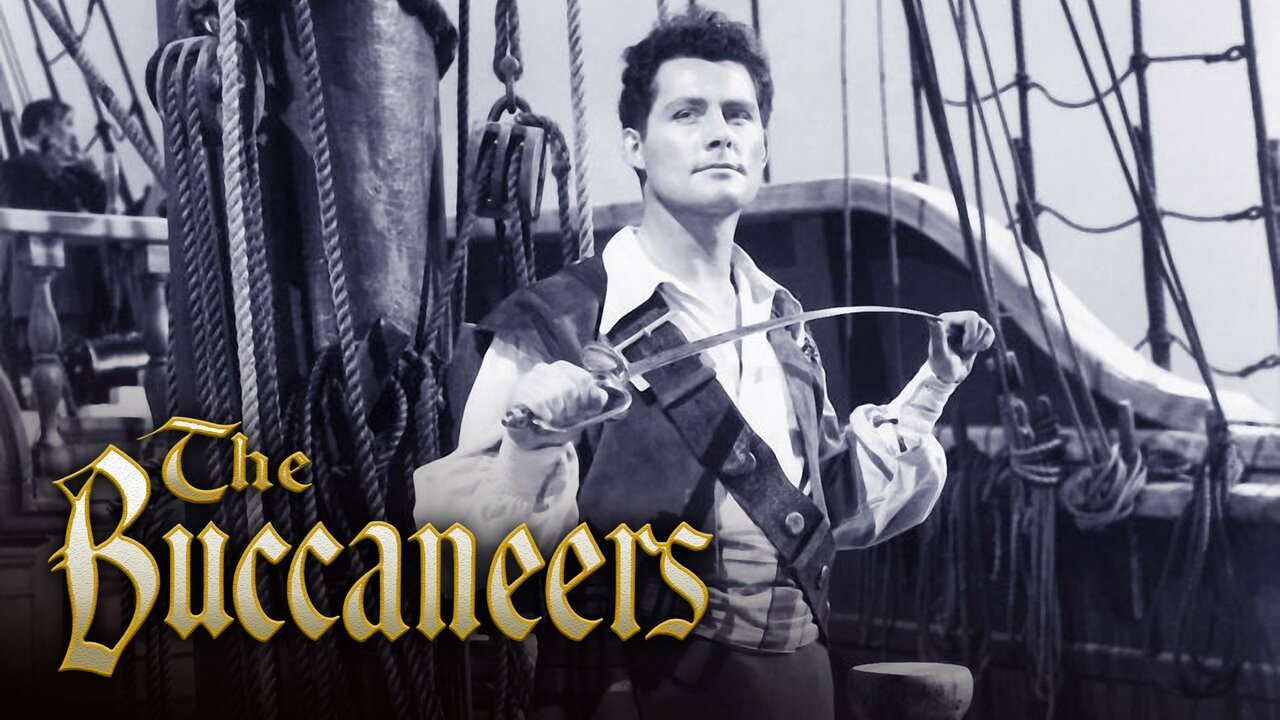
Classic TV Flashback: The Buccaneers (1956)


The Buccaneers
Debut: September 19, 1956
Starring:  Robert Shaw, Paul Hansard, Brian Rawlinson, Edwin Richfield
Synopsis: On New Providence, Captain Dan Tempest, an ex-pirate turned privateer for the Crown, forms an uneasy alliance with Lt. Beamish, the deputy governor, to fight the King's enemies in the Caribbean.

Trey: The Buccaneers was Sapphire Films drama series for ITC Entertainment, broadcast by CBS in the US and ATV and regional ITV companies in the UK. It was somewhat aimed at kids and ran for 39 episodes until June 12, 1957.

We watched episode 12 from December 5, 1956, "Dan Tempest and the Amazons." It was written by Peggy Phillips and Zachary Weiss. I picked this episode because I was intrigued about how they were going to fit Amazons in with Pirates. Bait and switch!

Jason: "Amazons" isn't perhaps the most obvious descriptor of the women here, no. The first couple of minutes of the show were such a showcase for a peculiar 18th century piratical brand of sexism (as presented in this mid-20th century production) that I began to fear the episode would be unfit for review other than finger-wagging condemnation from the 21st century. As the plot unfolded, matters took a (somewhat!) more progressive turn, while remaining peculiar.

Trey: Yes, the women, potential brides looking for prospects in the New World, who have been kidnapped and held for ransom by a "French" (I use that term only loosely as the actors inconsistent and half-hearted attempts at an accent don't rate. I've heard better accents around a D&D table.) pirate. Ultimately, the women prove surprisingly capable and free themselves.


Jason: And that brief sketch probably telegraphs the light-hearted tone of the episode. It's that variety of corny, "battle of the sexes" humor. It ignores the unsavory potential of the situation, keeps the violence gentle slapstick, the references to adult themes mostly veiled, and the sense of peril muted. As a result, there are few swashes successfully buckled. 

Trey: Certainly not. Tempest and his sea dogs are routed by matrons and maids. Of course, one could say that this was due to the men's sexist tendency to underestimate the women. Still, not stuff likely to form the basis of childhood, wood sword derring-do. 

Jason: A glance at the episode listings online suggest this episode may have been an anomaly, a breather from all the action of previous episodes. Sorry kids, no Blackbeards or El Supremos this time around.   


I was excited to see some early work by the legendary Robert Shaw, but I must admit to some degree of disappointment. Am I wrong here or was his performance phoned in? Maybe he just didn't have much to work with this episode?

Trey: Definitely seems phoned in. Hopefully it was just a story he could get behind, not his approach to the whole show.

Jason: Unlike previously reviewed half-hour action/drama shows (like M Squad!), notable for their hyper-condensed plots, The Buccaneers just felt simplistic. Again, this is a show intended for children.

Trey: Not more simplistic but sort of stretched. It could have done with at least another twist or complication. Again, though is it the show or merely this episode?

Jason: I think it would be interesting to try another episode to see if maybe we just picked a clunker this time around. I'm sure I can spare another 25 minutes sometime!

Tuesday, December 19, 2023

Classic TV Holiday Special: Dragnet (1951)


Dragnet (1951 series)
Debut: December 16, 1961
Created by Jack Webb
Starring: Jack Webb, Ben Alexander
Synopsis: Sgt. Joe Friday and his partners follow procedure as they investigate crimes in Los Angeles.

Trey: With the holiday season upon us, it seemed like a good time to dive into the Classic TV tradition of the "Christmas episode." What better place than the venerable, multi-media police procedural franchise, Dragnet. Dragnet got its start on radio in 1949 but moved to TV in 1951. That series ran until 1959. It was revived in new, color series in 1967 and ran until 1971. Films and new series have shown up into the 21st Century.

We watched the episode "The Big Little Jesus" which aired on December 24, 1953. Father Rojas at the Old Mission Plaza Church discovers that the statue of the baby Jesus has been stolen from the Nativity display. The statue isn't worth a lot, but it's of great sentimental value to the parish. Friday and Smith promise to try to get it back before Christmas Day mass--but that means they've got less than 24 hours to do it.

This same story had aired just two days before on the radio show. It would also be remade (as "The Christmas Story"), virtually unchanged, for the 1967 series, airing on December 21, 1967. 

Jason: I vaguely remember watching a few episodes of the 1967 series in syndication in the mid-80s, particularly the infamous LSD episode, as a piece of kitsch illustrating square culture's inability to grasp what the groovy kids were up to. But it had style! The 1953 episode we watched, created at the height of its cultural moment, feels right at home with itself and resists a solely ironic viewing. It is also quite stylish! 

That said, the opening scene jolts the viewer into a bygone culture, as ultra-square bachelor Joe Friday dutifully fills out an impressive stack of Christmas cards. His partner Frank recommends marriage as the pragmatic solution to this burden - his wife takes care of all such matters. Joe muses, seemingly crunching the numbers for a moment, when they are interrupted by news of theft of a statue of the baby Jesus. For the time being, Joe remains all cop.

Their exchange, a machine gun barrage of snappy dialogue presented in quick cuts from close up to close up, demands the viewer's full and complete attention and sets the tone for the rest of the episode. Information is delivered verbally, due at least in part, I'm sure, to Webb's use of the nearly unaltered script for the radio version of Dragnet, as well as time and budgetary limitations. The dialogue comes at breakneck speed, as if fueled by black coffee and an ashtray full of Chesterfields.

One of my favorite moments was when the priest apologized to Joe and Frank for monopolizing their time during the holidays. 

I found this episode fascinating, as a window into the increasingly foreign past and as another example of the hyper-condensed storytelling of its era. 


Trey: I too had seen snippets of the '60s version and I'd seen the 1987 spoof film. Joe Friday doesn't seem quite as square and certainly not as priggish as he would in in the 60s. The 50s is the world he was meant for, though still it's obvious he's a straight-arrow, by-the-book sort.

It's interesting what it says about the view of faith in this era. AVClub did a comparison between this version and the 60s remake that's interesting. All and all, I found my heart suitably warmed with this one. Jason, what about you?

Jason: Most definitely. If Joe Friday can get a little sentimental, there's something there for all of us!

LinkWithin

Related Posts with Thumbnails